How to start a sports coaching business in the UK
Starting a sports coaching business in the UK, step by step: qualifications, DBS, insurance, HMRC, pricing, venues, first clients and taking bookings.
· 6 min read
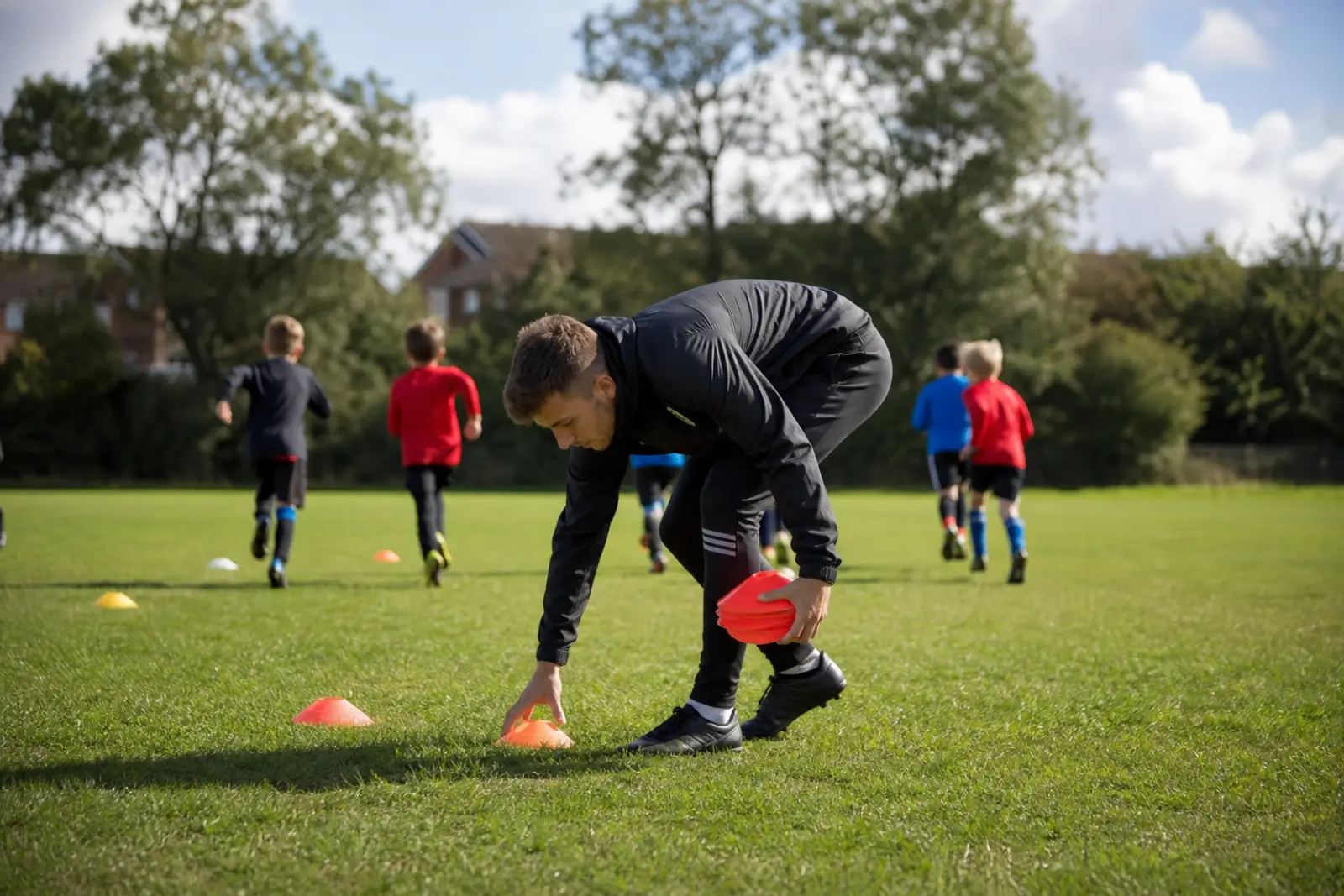
You're helping out at your old club on a Saturday morning. A parent watches the session and waits until the kids are packing the cones away. Then they ask if you do one-to-ones. You say "maybe". You've no idea what you'd charge, whether you're insured or how they'd even pay you.
A lot of coaching businesses start with that question. The steps below are in order, so next time someone asks, you can say yes.
1. Decide what you'll coach and who for
Start narrow. "Football coaching" is hard to sell. "Goalkeeper sessions for under-12s on Saturday mornings" is easy, because a parent can see straight away whether it's for their child.
Ask yourself:
- which sport you know best, and which part of it
- which age group or level you're comfortable with
- whether you want weekly sessions, holiday camps, one-to-ones or a mix
- how many hours a week you can give it, around a job or your studies
You can widen out later. Your first bookings come from a clear first offer.
2. Get qualified, and get a first-aid certificate
Your sport's national governing body sets the coaching qualifications that parents and venues look for: The FA, the RFU, Swim England, England Netball and the rest. Most have an entry-level course for people starting out. Check which level lets you coach on your own rather than as an assistant, because that's often a step up.
Get a first-aid certificate too. Some governing bodies ask for a specific course, so check theirs before you book one. If you're a student, ask your university or college sports club. Many run courses for members.
3. Get a DBS check
If you'll coach children, parents and venues will expect a DBS check (a PVG check in Scotland, or AccessNI in Northern Ireland). As an individual you can only apply for a basic check yourself. An enhanced check, the one usually needed for coaching children, has to go through an organisation registered to request it, such as your governing body, a club or an umbrella body. Your governing body is the place to ask first.
4. Sort your insurance
Get public liability insurance before you run a single paid session. Many coaches also take professional indemnity cover, for claims that your coaching or advice caused someone harm or loss. Some governing body memberships and qualifications include insurance, so check what you already have before buying more. Venues will often ask to see your certificate.
5. Write a safeguarding policy
A safeguarding policy says how you keep children safe and what you'll do if you're worried about one. It covers things like who can collect a child, how you handle photos and who you report a concern to.
You don't need to write it from scratch. Your governing body will usually have a template, and the NSPCC's Child Protection in Sport Unit has guidance for small providers. Keep it short, and make sure it's something you'd actually follow on a busy day.
6. Register as self-employed with HMRC
If you coach for yourself, that's self-employed income, and it counts if you're a student too. You register with HMRC for Self Assessment and file a tax return each year. There's a small trading allowance, and below it you may not need to register, so check the current rules on GOV.UK.
Keep a simple record of what comes in and what goes out from the first session. It makes the tax return a much shorter job.
7. Work out your prices
Don't copy the coach down the road and hope. Work it out:
- List your costs per session: venue hire, travel, kit, insurance spread across the year, and card or booking fees.
- Add your time, including planning and travel, not only the hour on the pitch.
- Work out how many people a session needs to cover all that, and how many you can coach well.
- Then look at local prices to see where you sit. Well below usually means you're undercharging. Well above means you need to be clear about what's different.
For camps, decide whether parents can book single days as well as the whole week. Families often book two children, so think about a sibling discount as well.
8. Find a venue
Schools, leisure centres, community halls and sports clubs all hire out space, and quieter times are often easier to get. Ask about their cancellation terms and what happens in bad weather. Paid sessions in a public park often need permission from the council, so ask before you set up. Universities and colleges sometimes let students book their facilities, so try yours.
9. Find your first clients
Your first clients nearly always come from people who already know you. Tell the club you play for, the parents you've met while helping out, your university sports club and friends with children.
Some things that help:
- run a short taster session so people can see how you coach
- put a poster up at your venue
- post in local parents' groups on Facebook, with the age group, day and place in the first line
- ask your first families for a review once they've had a few sessions
Once strangers start looking you up, a handful of honest reviews counts for a lot.
10. Take bookings and payment properly
This is where the admin creeps in. Bookings by WhatsApp, money by bank transfer and medical notes buried in your messages soon turn into an evening a week matching it all up. Set it up properly from the start:
- take payment when people book, so a place is only taken once it's paid for
- write a cancellation policy and have people agree to it before they pay
- ask for medical details, emergency contacts and photo consent at booking
- keep a register on the day, including who collected each child
Do that from the first session and you won't be doing admin after the kids are in bed.
11. Have a profile people can find
Before anyone books, they'll look you up. A profile that shows your qualifications, what you coach, where and who for, plus a decent photo, makes you look like a business before you've had a single client.
Make it easy to share. With a link for your Instagram bio and a QR code for posters, every conversation at the side of a pitch can end with somewhere to look. Getting your coaching listed where parents and athletes search means people who've never met you can find you too.
How it works on Pitch Gurus
Start on the free Coach plan. It gives you a public profile on the Pitch Gurus marketplace, where parents and athletes search for coaching, and you don't need a card to set it up. Build it while you're getting qualified and it'll be ready when the first parent asks.
When you have your first paying client, the Service Provider plan lets you sell sessions, camps and services with booking and payment in one step. Parents pay by card when they book, and Stripe pays you into your own bank account, usually within 2 to 7 business days. Pitch Gurus charges a 3% fee per booking, plus Stripe's card fee, and refunds follow the cancellation policy people agreed to before paying.
Booking questions can ask for medical conditions, photo consent and dietary needs for each child. The register runs on your phone, with collection passwords and a named adult recorded at every pick-up. See how Pitch Gurus works for coaches.