Sports camp medical and consent form template
A sports camp medical and consent form you can copy: every question to ask parents, plus how to handle health data safely under UK GDPR.
· 6 min read
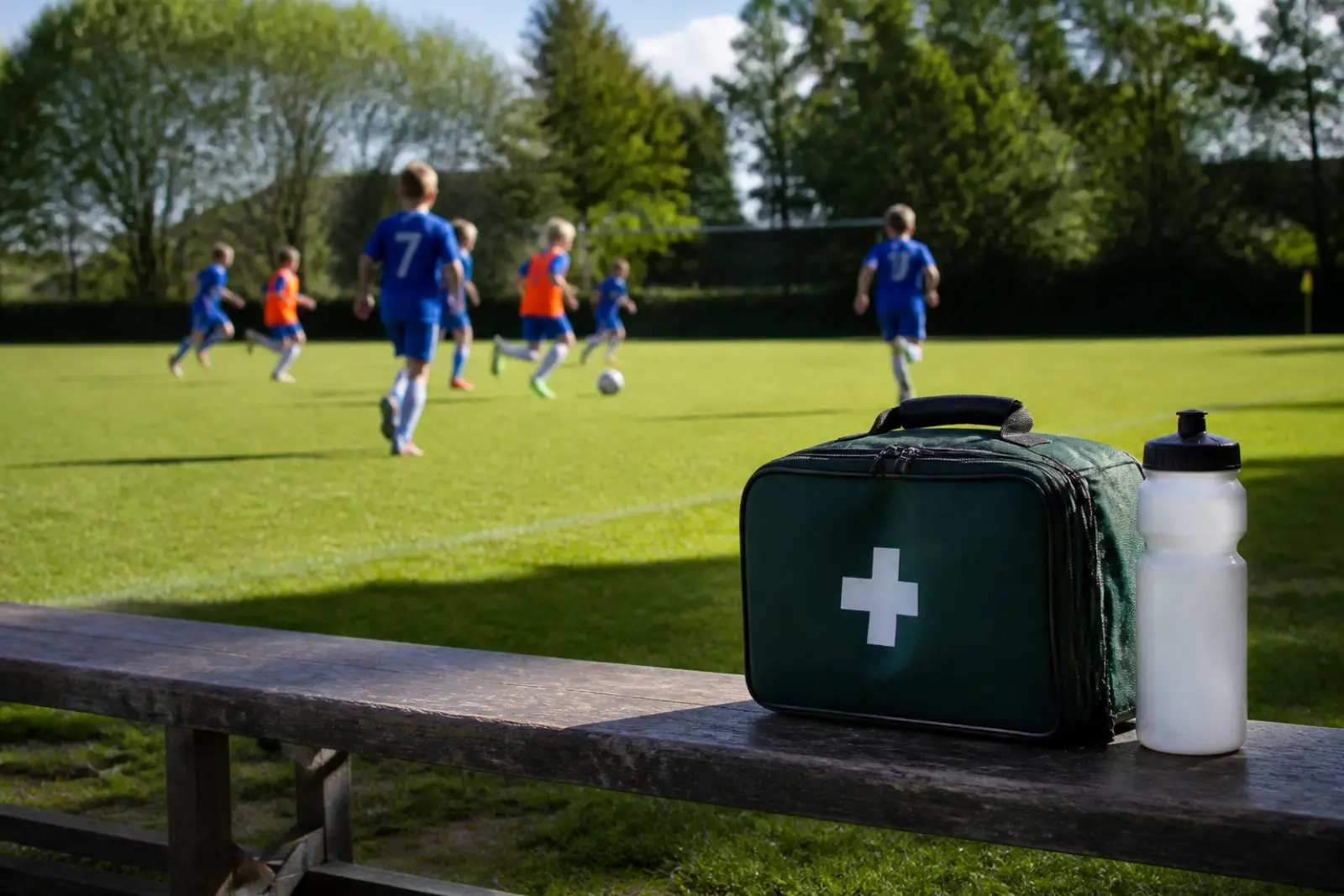
It's day two of your Easter football camp. A boy comes off the pitch holding his hand. Wasp sting. Before you do anything else, you need to know two things: is he allergic, and is there an auto-injector in his bag?
The answer exists somewhere. Maybe in a WhatsApp from his mum three weeks ago. Maybe on a paper form in the glovebox. A good medical and consent form, collected before the first day, makes that answer take ten seconds instead of five minutes.
Below is a complete template you can copy and adapt, then some short guidance on keeping the information safe.
How to use this template
A few habits make any form work better:
- Ask every question once per child, not once per family. Siblings rarely have the same allergies.
- Collect it before the first day, ideally when parents book, so you aren't chasing forms at the gate.
- Ask parents to write "none" rather than leave a blank. Then a blank means "not answered", and you know to ask.
- Keep the wording plain. A parent filling this in on their phone at 10pm should understand every question.
The form
Copy the headings and questions below into whatever you use to take bookings.
Child's details
- Full name
- Name they like to be called
- Date of birth
- School year
- Which days they're attending
Parent and carer contacts
- Name of each parent or carer
- Relationship to the child
- Mobile number
- Email address
- Home address
- Who we should call first during the day
Emergency contacts
- Name of an adult we can call if we can't reach you
- Their relationship to the child
- Their mobile number
- A second emergency contact, if possible
Medical conditions
- Does your child have any medical conditions? For example asthma, diabetes, epilepsy or a heart condition.
- If yes, how does it affect them during sport and exercise?
- What signs should staff look out for?
- What should staff do if they see those signs?
- Has your child had a recent injury or operation that limits what they can do?
Allergies
- Does your child have any allergies? Food, insect stings, medicines, plasters or anything else.
- What happens when they have a reaction?
- Do they carry an adrenaline auto-injector? If yes, how many, and where will it be kept during the day?
- Do they have an allergy or emergency plan from a doctor? If so, please bring a copy.
Medication, and who may give it
- Does your child need to take any medication during camp hours?
- Name of the medicine, the dose, and the time it's taken
- Can your child take it themselves, or does an adult need to give it?
- Do you agree to camp staff giving this medicine as described above?
- Does your child carry their own inhaler?
Ask parents to hand medicines over in the original packaging with the child's name on. Decide your own policy on medicine that isn't prescribed, such as painkillers, and state it on the form so nobody has to guess.
Dietary needs
- Does your child have any dietary requirements? For example vegetarian, vegan, halal, kosher or gluten-free.
- Is any of this an allergy or intolerance rather than a preference? If so, please also fill in the allergies section.
- Is there anything they mustn't eat or drink during the day?
Additional needs and support
- Does your child have any additional needs, disabilities or conditions that affect how they join in? For example autism, ADHD, sensory needs, or hearing or sight loss.
- What helps your child have a good day?
- Is there anything that tends to upset them, and what helps them calm down?
- Do they need any help with the toilet, changing or eating?
- Is there anything else you'd like the coaches to know?
Consent for first aid and emergency treatment
- I agree to camp staff giving my child first aid. Yes or no.
- If I can't be reached in an emergency, I agree to staff getting medical help for my child, including calling an ambulance and going to hospital with them. Yes or no.
- I confirm this information is correct, and I'll tell you if anything changes before or during the camp.
Photo and video consent
Give each use its own yes or no, so parents can agree to some and not others:
- Photos and videos shared only with families on this camp
- Photos on our website
- Photos on our social media
- Photos in printed flyers or posters
- May we use your child's first name alongside a photo?
Add a line saying how parents can change their mind later, and make it easy to do.
Who may collect your child
- Names of the adults allowed to collect your child, and their relationship to them
- A collection password anyone collecting will be asked for
- May your child leave on their own at the end of the day? (Only offer this for older children, and only if it fits your policy.)
- Is there anyone who must not collect your child? If a court order applies, please tell us.
If you're new to collection passwords, the short version is: the parent agrees one word with you, and whoever collects has to say it. Everything else about running pick-up safely is on our pick-up safeguarding page.
Keeping the information safe
Health information is special category data under UK GDPR. That means it needs more care than a name and phone number. You need a lawful reason to hold it, plus an extra condition for special category data, and you need to tell parents why you're asking.
In practice, for a small camp, that comes down to five habits.
- Collect only what you need. If a question doesn't change what you'd do on the day, cut it.
- Tell parents why you're asking and who will see it. A couple of sentences at the top of the form is enough.
- Keep it secure. That rules out an open group chat, printed sheets left in a kit bag and a laptop anyone can open.
- Share it only with the staff who need it: the coaches running that camp and whoever does first aid, not every coach you've ever worked with.
- Decide how long you keep it. Write the period down, then delete or shred the forms when it's up.
The Information Commissioner's Office (ICO) has clear guidance for small organisations on special category data, privacy notices and how long to keep records. Give it half an hour before your next camp. This post is general guidance, not legal advice.
Before the first morning
A form only helps if someone reads it. The evening before camp starts, go through every answer. Brief your coaches on any allergies, conditions and medicines. Check you know where each auto-injector and inhaler will be. And chase anyone whose form still has blanks, because the gate on day one is the worst place to do it.
How it works on Pitch Gurus
On Pitch Gurus, the form is part of the booking. Booking questions can ask for medical conditions, photo consent, dietary needs and first-aid consent for each child, so the answers arrive with the booking instead of in a separate message you have to file. Parents pay by card at the same time, so there's no chasing money or forms afterwards.
You can download the participant list as a spreadsheet and add your booking questions as columns, so the first-aider's copy has each child's medical answers next to their emergency contact. Keep that file to the people who need it. Coaches allocated to a camp see its attendee list, and coaches who aren't don't.
On the day, the register runs on your phone, with collection passwords and a named adult recorded on every handover. More on how the forms work is on the medical and consent forms page.
There are no forms to type up after the kids are in bed, and the answers are in front of you when that wasp turns up. See how selling works on Pitch Gurus.